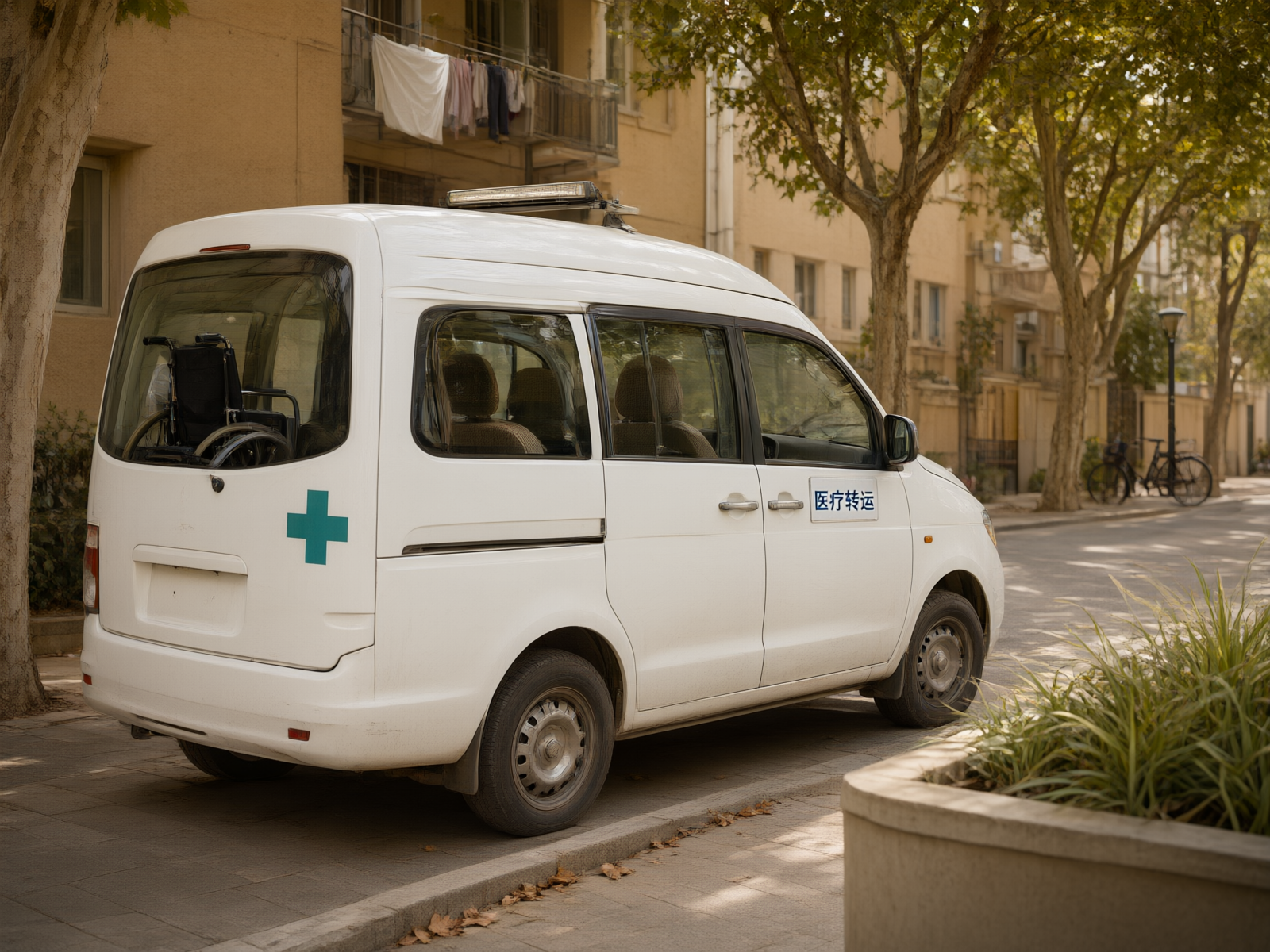

High-Speed Rail vs. Air Medical Transport: Choose the Right Option Based on Your Condition and Timeline
After medical treatment away from home, patients often face a practical challenge: how to return safely to their residence for continued recovery. The non-emergency medical transport sector currently relies on two primary methods: high-speed rail and air transport. Each has distinct advantages in speed, cost, and suitability for specific medical conditions. Choosing the right method ensures both safety and efficiency.
After receiving medical care away from home, patients often face a practical challenge: how to return safely to their residence for continued rehabilitation. In the non-emergency medical transport sector, there are two primary options—high-speed rail and air transport. Each has distinct trade-offs in speed, cost, and suitability for specific medical conditions. Choosing the wrong mode can increase the patient's burden or introduce additional risks.

Basic logic of two transfer methods
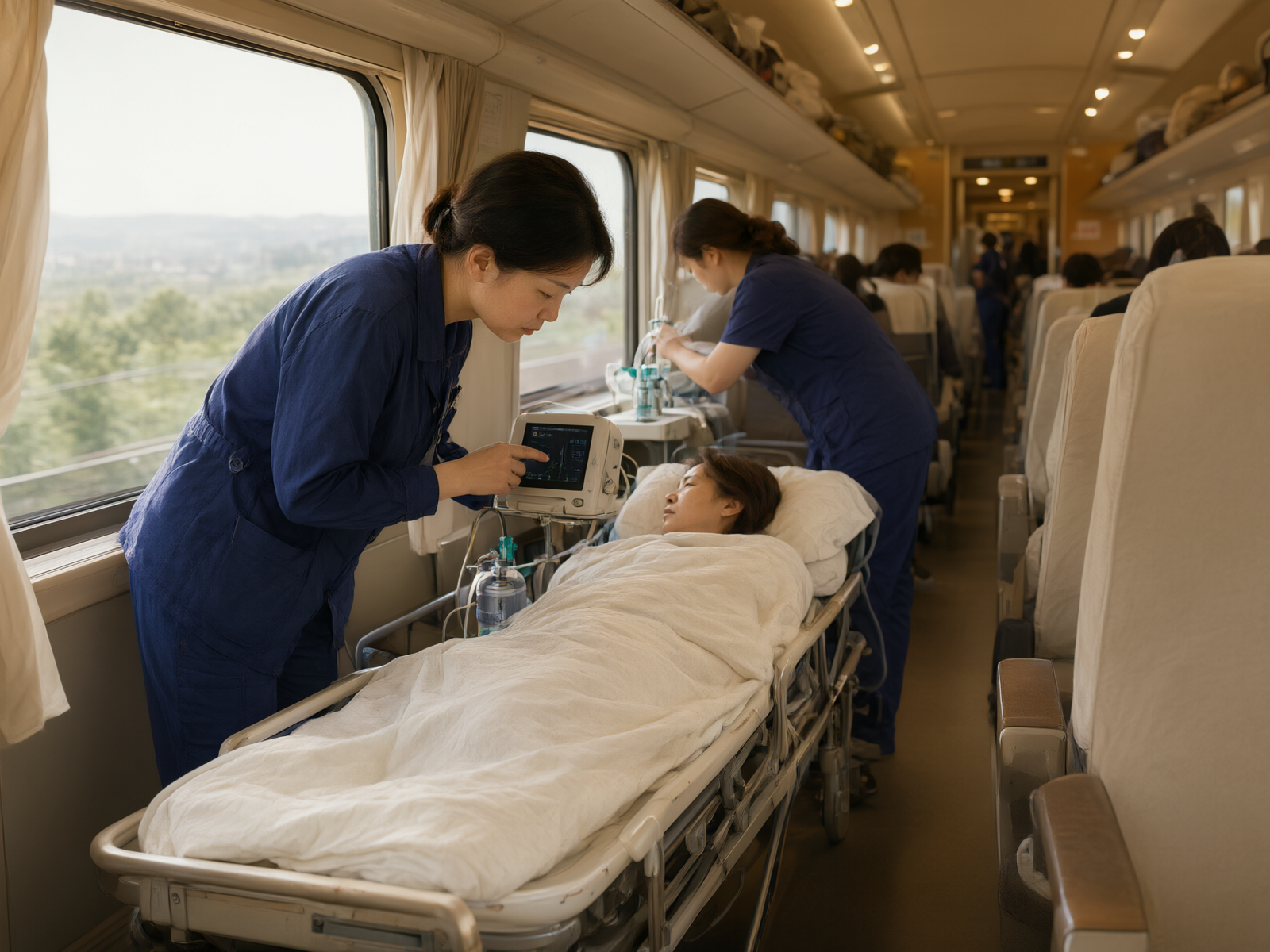
High-speed rail patient transport leverages the railway network to reserve dedicated space on scheduled trains, with medical staff providing continuous care. Its core advantages include smooth operation, spacious interiors, and controllable scheduling. Onboard, patients can lie flat or use a specialized stretcher area, allowing caregivers to monitor their condition closely. Medical resources at沿途 stations can be coordinated for seamless handoffs. With frequent departures and high on-time performance, this service is ideal for long-distance travel by patients who are stable but require ongoing care.
Air transport moves patients across provinces quickly via chartered civilian aircraft or commercial flights with stretcher seats. The key advantage is speed: it can cover over 2000 kilometers in just 2 to 4 hours. However, coordination is more complex—you must confirm the aircraft type, cabin availability, and medical documentation with the airline in advance. Delays may occur due to weather conditions or air traffic control, potentially extending travel time beyond expectations.
Applicable scenarios for high-speed rail transfer
For patients with stable conditions requiring long-distance travel but not needing arrival within hours, high-speed rail transfer is often the better choice. Typical scenarios include returning home across provinces during post-surgery recovery, traveling back after chronic disease check-ups, and transporting elderly patients with mobility issues to receive medical care in other regions.
These patients share stable vital signs and do not require frequent medical intervention, but prolonged sitting or standard transportation can cause discomfort or risk. High-speed rail allows them to remain in a supine position, enables close monitoring by medical staff, and provides access to cities along the route for mid-journey care adjustments.
Applicable scenarios for air freight transfer
Patients requiring time-sensitive care or traveling beyond the same-day high-speed rail range are better suited for air transport. Typical scenarios include post-transplant patients needing short-term follow-up at their original hospital, acute-phase patients requiring immediate transfer to a higher-level facility, and cancer patients traveling across cities for specialized treatment who must return the same day.
Air transport offers speed advantages that are clinically meaningful in these scenarios. However, it has clear medical contraindications: patients with undrained pneumothorax, recent eye surgery, severe anemia, or other conditions that may worsen at low cabin pressure should not fly. Such decisions require explicit clearance from the attending physician.
Three Key Dimensions for Family Decision-Making
In actual decision-making, family members can filter options progressively across three dimensions.
The first dimension is clinical tolerance. Only after the attending physician confirms that the patient's vital signs are stable and no frequent medical intervention is required should we assess their tolerance to pressure changes and positional restrictions. This is a prerequisite and cannot be skipped.
The second dimension is distance and time. When the distance between two locations is within 1500 kilometers, high-speed rail typically reaches the destination in under 8 hours; including transfer time at both ends, the total travel time is comparable to air transport. For distances exceeding 1500 kilometers with urgent time requirements, air transport demonstrates a clear efficiency advantage.
The third dimension is budget. High-speed rail transfers are relatively cost-controlled, whereas air transfers involve chartered flights, airline coordination, and ground logistics, typically costing N times more than high-speed rail. When medically feasible, families must balance transfer efficiency with financial feasibility.
Our experience completing over 5000 non-emergency medical transports within 5 years shows the safest approach is for the attending physician to first assess the patient's tolerance for transport, then select the mode based on distance and time urgency. Both high-speed rail and air transport have their appropriate use cases; the key isn't which is superior, but which best fits the patient's current condition and time constraints.
Reference
- [1]Regulations on the Administration of Medical Institutions— Government of China
- [2]Administrative Measures for Pre-hospital Medical Emergency Care— National Health Commission
- [3]"Non-Emergency Medical Transportation Service Standards"— Ministry of Transport
- [4]Essential Knowledge and Precautions for Emergency Medical Transport— Official Website of the Chinese Government
The information above is for educational purposes only. Specific policies are subject to those issued by local health authorities.